
Quick note: If you’re researching tub to shower conversion boston, this guide covers key considerations for Boston homeowners.
{“title”:”Tub to Shower Conversion in Boston: What Homeowners Need to Know Before Remodeling”,”html”:”
Thinking about converting your old bathtub into a modern walk-in shower? You’re not alone. Many Boston-area homeowners—especially those in historic brownstones in Back Bay, triple-deckers in Cambridge, or mid-century homes in Newton and Brookline—are choosing tub-to-shower conversions to improve safety, maximize space, and update their bathrooms. At Bath Design Boston, we specialize in helping Greater Boston, Middlesex County, Norfolk County, and surrounding communities transform outdated bathrooms into stylish, functional spaces.
This guide walks you through everything you need to know before you start your conversion project, from structural considerations specific to Boston’s older housing stock to the practical benefits of making the switch.
Why Boston Homeowners Are Making the Switch
There are several compelling reasons homeowners in the Greater Boston area are choosing to replace their bathtubs with walk-in showers:
- Aging in place: Stepping over a high tub wall becomes increasingly difficult as we age. Walk-in showers with low or curb-free thresholds offer a safer bathing option.
- Accessibility needs: Households with mobility challenges or family members who use mobility aids benefit greatly from barrier-free shower designs.
- Space optimization: Boston homes—especially one-bedroom condos and older apartments—often have compact bathrooms. A shower can feel more spacious and open than a tub.
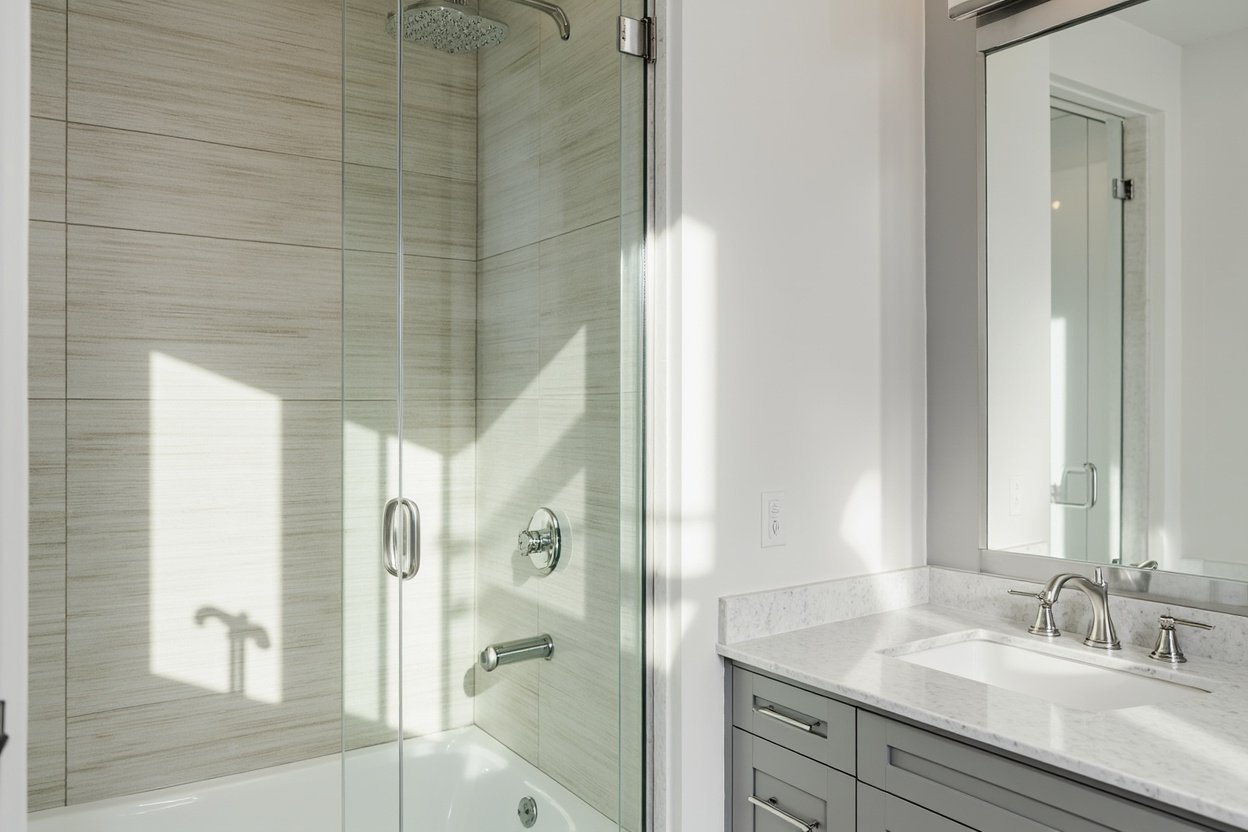
- Modern aesthetic: Frameless glass enclosures, custom tile, and rainfall showerheads give your bathroom a high-end look that appeals to today’s buyers.
- Resale value: Many buyers in the Boston market specifically look for homes with walk-in showers rather than combined tub/shower units.
If your current bathtub rarely gets used, converting it to a shower can add real everyday value to your home.
Understanding Boston-Specific Challenges
Boston’s older housing presents unique challenges that require careful planning. Before starting your tub-to-shower conversion, keep these factors in mind:
Floor joist and subfloor conditions: Many historic Boston homes have 2×8 or smaller floor joists that may not be positioned ideally for the new drain location. We assess the subfloor structure during our initial consultation to ensure proper support and code compliance.
Plumbing placement: In older homes, drain lines may be cast iron or copper, and they may not be located where you’d ideally want your new shower. Relocating plumbing adds cost, so understanding your existing setup early saves surprises.
Ventilation concerns: Proper ventilation is critical in Boston bathrooms, where humidity from New England summers and winter heating can lead to condensation issues. Older homes often have inadequate exhaust fans or windows. We ensure your new shower includes appropriate venting to protect against mold and moisture damage.
Waterproofing in multi-family buildings: If you live in a condominium or three-decker, your bathroom may be on an upper floor. Waterproofing isn’t just a good practice—it’s essential to protect the units below. We use membrane waterproofing systems and proper slope techniques to prevent leaks.
The Conversion Process: What to Expect
While every project is unique, most tub-to-shower conversions follow a general process. Understanding each step helps you feel more confident about moving forward.
- Initial consultation and measurement: We visit your home, assess the existing plumbing and structure, discuss design preferences, and take measurements. This visit typically takes one to two hours.
- Design and material selection: You choose your shower base, wall surrounds or tile, glass enclosure style, fixtures, and any accessories like built-in benches or grab bars. We guide you through options that fit your budget.
- Permit preparation: Depending on your city or town, permits may be required. Boston, Cambridge, Somerville, and other municipalities have varying requirements. We handle the permit documentation and ensure compliance.
- Demolition and plumbing modifications: We remove the existing tub, patch the floor and walls, and make any necessary plumbing adjustments.
- Waterproofing and installation: This is one of the most critical phases. We apply waterproof membranes, install the shower pan, and prepare the walls for your chosen finish.
- Tile or wall surround installation: Custom tile work or pre-fabricated wall surrounds are installed according to your selection.
- Glass enclosure and fixtures: The glass door or enclosure is measured and installed, along with your showerhead, controls, and any additional features.
Popular Features for Boston Bathrooms
When designing your new shower, consider these popular options that work especially well in Boston homes:
- Custom subway tile: A timeless choice that complements both historic and contemporary Boston interiors. Available in a wide range of sizes, colors, and finishes.
- Curbless walk-in showers: Ideal for accessibility and for creating a seamless look in smaller bathrooms. Curbless entries also work well when aligning with existing floor heights in older homes.
- Frameless glass enclosures: Open up the bathroom visually and give a modern, premium feel without taking up extra space.
- Built-in benches: Practical for shaving, dressing, or simply resting, built-in benches add functionality without cluttering the space.
- Heated floors: Many Boston homeowners add radiant floor heating under tile, a welcome luxury during cold New England winters.
Making the Most of Your Investment
A tub-to-shower conversion is a significant home improvement project, and making thoughtful choices helps you get the most value. Focus on quality waterproofing, as this is where shortcuts lead to costly problems. Choose durable materials that will hold up to Boston’s climate, especially if your bathroom sees heavy daily use. And consider the long-term resale appeal—neutral finishes and timeless tile choices tend to perform better than trendy colors.
Working with a local contractor who understands the specific challenges of Boston-area homes makes a real difference. At Bath Design Boston, we bring years of experience with older properties across Greater Boston, Middlesex County, Norfolk County, and the surrounding communities.
Ready to plan? Visit our bathroom remodeling page for Free, no-obligation estimate
“}
When planning your tub to shower conversion boston, focus on clear scope, proper waterproofing, and smart layout choices.