
Quick note: If you’re researching bathroom vanity installation boston, this guide covers key considerations for Boston homeowners.
“html”: “
Thinking about updating your bathroom with a new vanity? Bathroom vanity installation in Boston requires more than just finding a stylish cabinet. Whether you own a classic Victorian in Back Bay or a mid-century home in Newton, understanding the process helps you make better decisions and avoid costly surprises.
Why the Right Vanity Matters in Boston Homes
Boston-area homes present unique challenges that affect vanity selection and installation. Many properties feature plumbing that sits above or below the subfloor, which means custom measurements are essential. Older homes often have uneven walls and floors that require careful adjustment during installation. A properly installed vanity does more than hold your sink—it creates storage, sets your design tone, and must withstand the humid conditions common in New England bathrooms.
Key Steps in Professional Vanity Installation
Proper bathroom vanity installation involves several critical phases that experienced contractors handle routinely. First, precise measurements ensure your new vanity fits the space without gaps or trimming. Second, plumbing connections must align perfectly with your chosen sink and faucet configuration. Third, the vanity must be secured to the wall studs to prevent shifting over time. Finally, sealing and waterproofing protect your investment from moisture damage that commonly affects Boston bathrooms.
Your installer should verify that wall framing can support the weight of solid surface or stone countertops, which often weigh considerably more than laminate options. This becomes especially important in multi-story homes where floor joist alignment matters for stable mounting.
Choosing the Right Vanity Style for Your Space
Boston bathrooms range from compact half-baths in historic row houses to spacious master suites in newer developments. Single-sink vanities work well in powder rooms and guest bathrooms where counter space matters less. Double-sink configurations serve busy family bathrooms better, though they require more wall space and may demand moving existing plumbing lines.
- Width: Standard vanities range from 24 to 72 inches. Measure your space accounting for door swing and clearance to adjacent fixtures.
- Depth: Standard depth is about 21 inches, but deeper options exist for larger bathrooms where they do not obstruct walkways.
- Height: Standard height sits around 34 to 36 inches. Taller vanities suit households where accessibility matters or where users prefer a more ergonomic height.
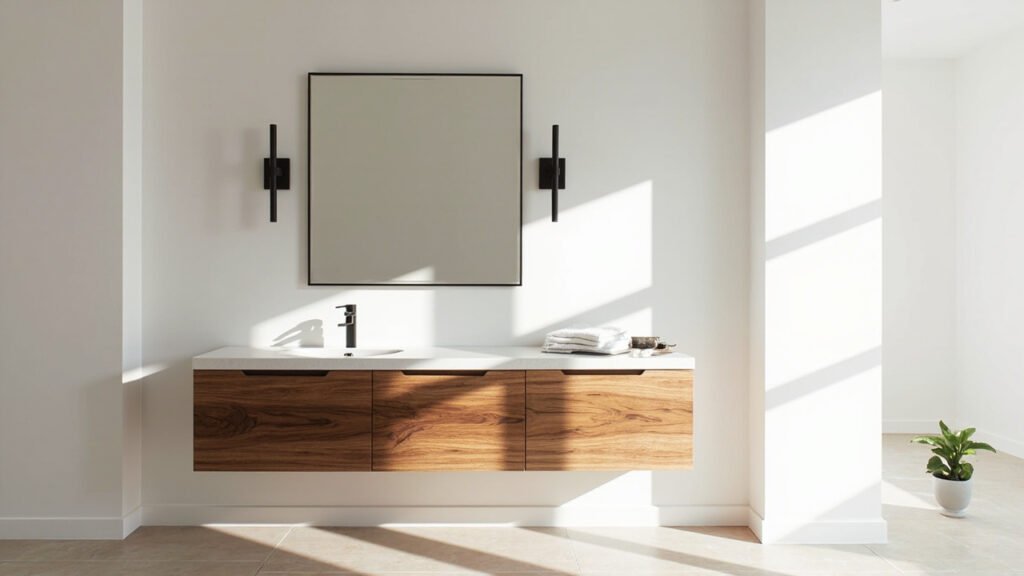
- Mounting: Wall-mounted vanities free up floor space but require secure anchoring. Freestanding units offer easier installation in homes where wall studs may not align ideally.
Managing Boston-Specific Installation Challenges
Ventilation poses a particular concern in older Boston-area homes. Many historic properties lack adequate exhaust ventilation, leading to moisture buildup that damages vanities, mirrors, and wall finishes. Professional installers recommend upgrading ventilation systems when replacing vanities, especially in bathrooms without functioning exhaust fans or windows that open fully.
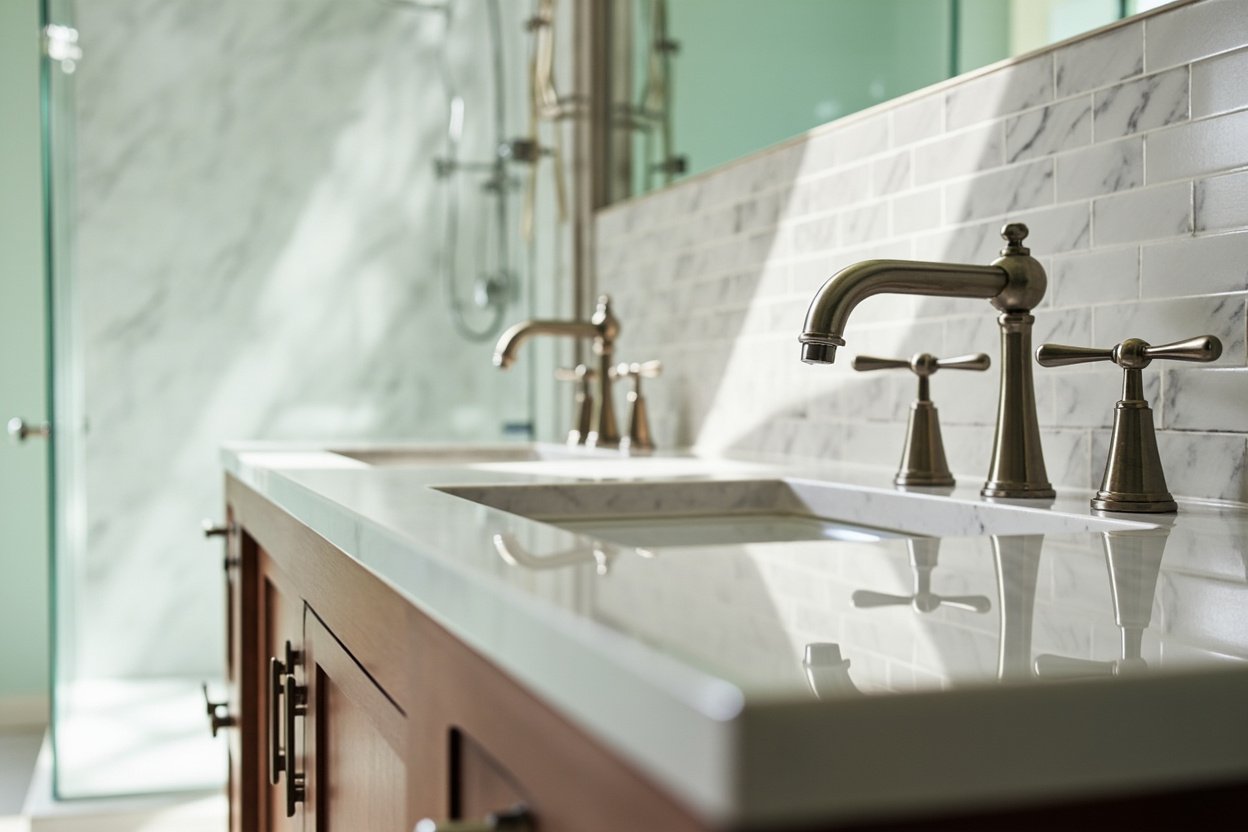
Waterproofing deserves equal attention. Even高质量 vanity materials suffer when exposed to persistent moisture. Proper installation includes sealing gaps where the vanity meets the wall, ensuring caulling around the sink deck remains intact, and verifying that plumbing connections do not leak behind the cabinet. These details matter more in Boston’s climate, where humidity swings dramatically between seasons.
Layout constraints frequently arise in city apartments and narrow townhouses where bathroom dimensions fall below standard ranges. Custom vanities or modular units that can be trimmed on-site provide solutions when stock sizes simply do not fit. Experienced contractors measure multiple times and discuss options before ordering materials to prevent fitting problems during installation.
What to Discuss With Your Contractor
Before work begins, talk openly with your vanity installation contractor about your priorities. Storage needs often drive vanity selection more than aesthetics. Consider how many people use the bathroom daily and what items they need to access quickly. Drawer configurations sometimes outperform cabinet-only designs for maintaining organization.
Discuss your timeline and access expectations. Full vanity replacement typically requires two to three days of work when plumbing modification happens. Simpler swaps where plumbing already aligns may complete in one day. Your contractor should explain the sequence clearly so you know what to expect and can plan accordingly.
Ask about warranty coverage on both materials and labor. Quality contractors stand behind their installations with clear terms that specify what they repair and for how long. Understanding this before signing helps you feel confident in your investment.
Making the Most of Your Bathroom Remodel
Bathroom vanity installation offers an opportunity to address long-standing frustrations with your bathroom layout and storage. Rather than simply replacing what exists, consider whether this project opens possibilities for broader improvements. Updating lighting fixtures, improving ventilation, and refreshing wall surfaces often make sense alongside vanity replacement, creating a more cohesive result than piecemeal updates.
Ready to plan? Visit our bathroom remodeling page for Free, no-obligation estimate
Choosing experienced professionals who understand Boston construction practices ensures your vanity installation proceeds smoothly, produces lasting results, and adds genuine value to your home.
”
}
When planning your bathroom vanity installation boston, focus on clear scope, proper waterproofing, and smart layout choices.