
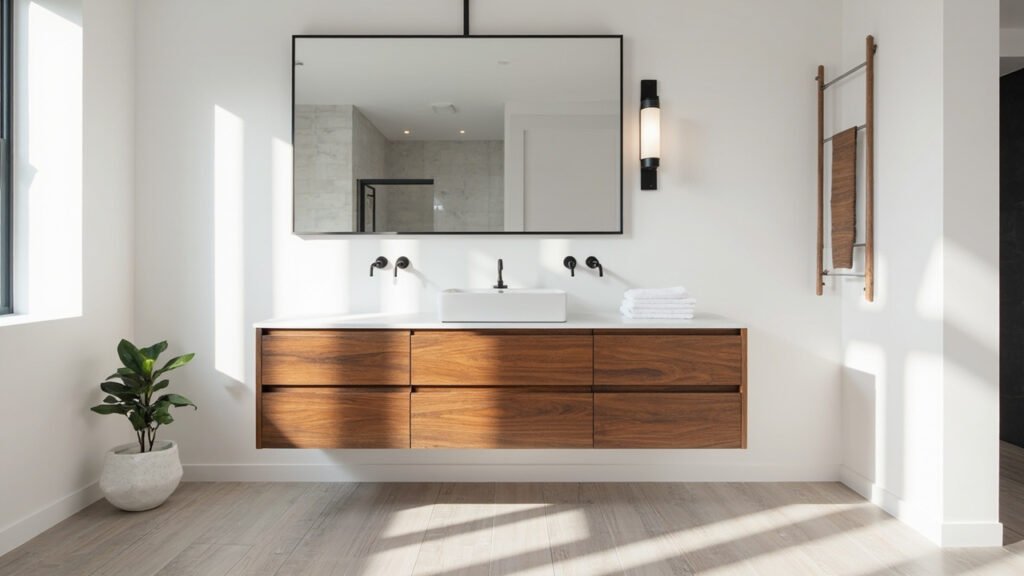
A bathroom vanity is one of the most impactful pieces in any Greater Boston bathroom. It sets the tone for the entire space, provides essential storage, and anchors your daily routine. Whether you are tackling a full bathroom remodel in Cambridge, replacing an outdated builder-grade vanity in Quincy, or designing a powder room in Brookline, proper installation makes all the difference between a vanity that looks great and one that performs reliably for years to come.
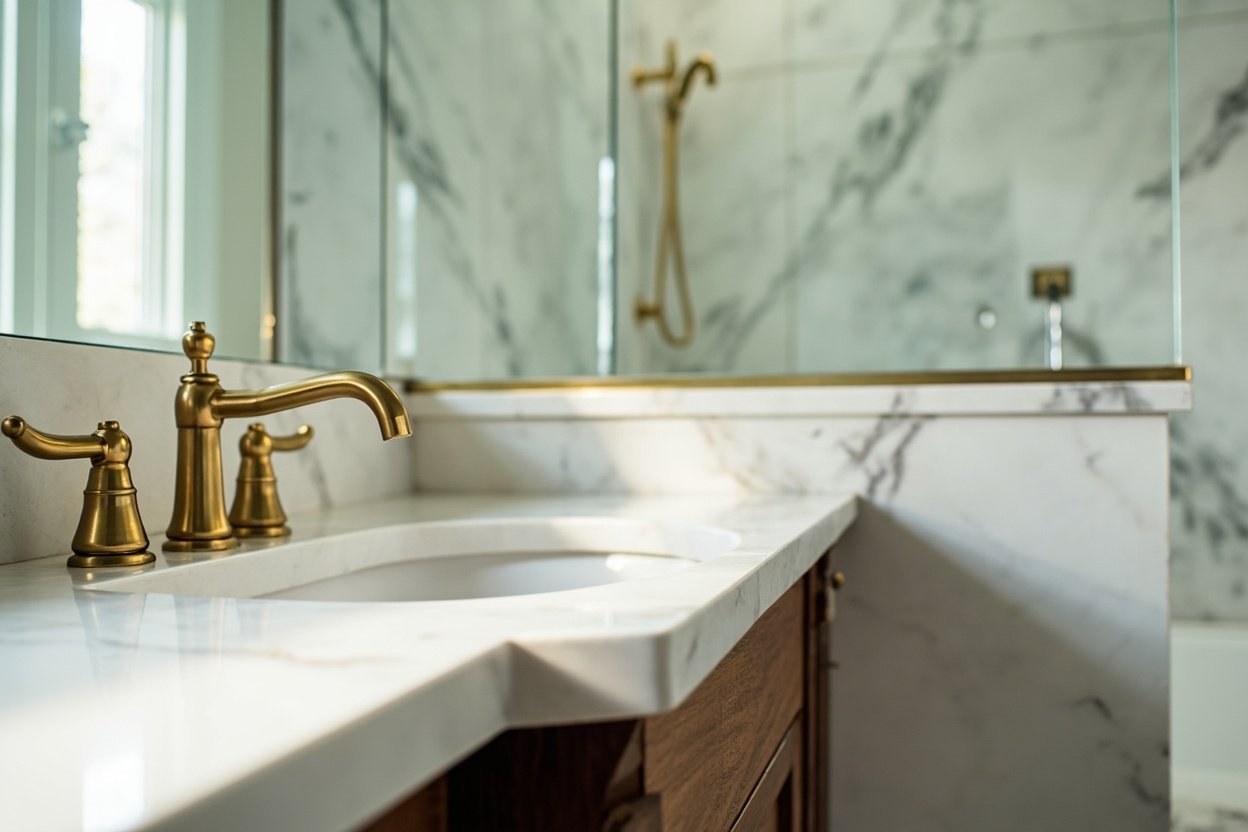
Boston-area homes present unique challenges that go far beyond what you will find in newer construction. Understanding those challenges before you start helps you plan smarter and avoid costly surprises.
Why Boston-Area Homes Require Special Consideration for Vanity Installation
Much of the housing stock across Greater Boston, Middlesex County, and Norfolk County dates back to the early 1900s. These historic homes bring character, but they also bring quirks that directly affect how a bathroom vanity should be installed.
- Out-of-level floors and walls. Settling foundations over decades create floors and walls that are rarely perfectly plumb or level. A vanity installed without accounting for this can appear crooked, gap at the top, or stress the mounting hardware over time.
- Plumbing in non-standard locations. Drain and supply lines in older homes were often run without regard for modern vanity dimensions. Relocating or adjusting plumbing adds complexity and cost.
- Limited square footage. Many Boston bathrooms were designed when people were shorter and spaces were smaller. Maximizing storage without compromising clearance requires careful measurement and planning.
- Ventilation concerns. Older bathrooms often lack adequate exhaust ventilation, leading to excess moisture that damages vanity materials over time. Addressing ventilation during a remodel protects your investment.
Choosing the Right Vanity for Your Boston Bathroom
Selecting a vanity involves more than choosing a style you love. The material, size, and configuration must work with your home’s existing conditions.
Solid Wood vs. Engineered Wood
Solid wood vanities handle Boston’s humidity swings better than particleboard options, but engineered wood with proper edge sealing can perform well in bathrooms with consistent ventilation. If your bathroom tends to stay damp after showers, lean toward materials that resist swelling and delamination.
Sizing Your Vanity Correctly
Measure your space twice before you buy. Account for door swing, clearance to the toilet, and the reach of plumbing. In tight Cambridge studios or compact South Boston row houses, a narrower vanity with deeper drawers often works better than a wide vanity that crowds the room.
Vanity Heights and Accessibility
Standard vanity heights run around 30 to 32 inches, but taller homeowners or those planning to age in place may prefer 34 to 36 inches. If you are combining a vanity with a tub or walk-in shower, consider how the heights relate to one another for a cohesive look and comfortable use.
The Bathroom Vanity Installation Process in Greater Boston
Professional vanity installation follows a sequence that protects your walls, floors, and plumbing while delivering a clean finished result.
First, the existing vanity and any damaged surrounding surfaces are removed. This often reveals water damage behind old vanities, particularly in homes where exhaust fans were never installed or were undersized. Addressing that damage before the new vanity goes in prevents recurring problems.
Next, the plumbing is assessed and any necessary adjustments are made. Supply lines and drain assemblies are updated to current code standards, which is especially important in older homes where original plumbing may be corroded or undersized.
The vanity base is then leveled and secured. In Boston-area homes, this almost always requires shimming. Shimmed vanities are then anchored to wall studs, not just drywall, to prevent tipping or pulling away from the wall over time. The countertop and sink are installed last, followed by faucet and drain hookup.
Waterproofing: A Step You Cannot Skip
Boston’s climate means your bathroom experiences significant humidity fluctuations throughout the year. Proper waterproofing around and beneath your vanity protects the cabinetry, subfloor, and wall structure from moisture damage.
A professional installation includes sealing edges where the vanity meets the wall and floor, ensuring caulk lines remain flexible and water-resistant, and verifying that all plumbing connections are tight and leak-free. These details add cost upfront but save thousands in potential water damage repairs down the road.
If your vanity installation is part of a larger bathroom remodel that includes walk-in showers, tub-to-shower conversions, or custom tile work, waterproofing becomes even more critical. Shower enclosures and tiled walls that are not properly waterproofed can wick moisture into adjacent vanity areas, causing premature failure of even the highest-quality cabinetry.
Common Mistakes to Avoid During Vanity Installation
Several recurring issues appear in vanity installations across the Greater Boston area. Avoiding them keeps your project on track and your bathroom looking its best.
- Mounting into drywall only. Bathrooms need vanities anchored into wall studs. Drywall anchors can pull out under the weight of a filled vanity or from normal daily use.
- Skipping the level check. Assuming your floor is level is a gamble in older homes. Always verify and shim as needed before securing the cabinet.
- Ignoring backsplash and wall protection. Water splashes on the wall behind the sink cause staining and mold. A properly installed backsplash or sealed wall surface extends the life of your renovation.
- Mismatching plumbing heights. Drain assemblies must align with the vanity’s sink configuration. Mismatches create standing water, slow drainage, and leaks.
- Choosing style over function. Open-shelf vanities look elegant but offer limited storage. In a family bathroom serving Norfolk County or Middlesex County households, closed storage usually wins in practicality.
How a Full Bathroom Remodel Complements Your New Vanity
A vanity installation often delivers the most value when it is part of a broader bathroom remodel. Tying new vanities to updated lighting, refreshed tile, and modern fixtures creates a cohesive result that adds real value to your home.
For example, pairing a new double-sink vanity with a walk-in shower conversion transforms a cramped single-bathroom home into a functional space for busy families. In powder rooms, a statement vanity with a vessel sink and custom tile can become a focal point that impresses guests without requiring a full-scale renovation.
Whether you are updating one bathroom or renovating an entire home, integrating your vanity choice with the overall design ensures cohesive style, efficient plumbing, and layouts that work for how your household actually lives.
Ready to plan? Visit our bathroom remodeling page for Free, no-obligation estimate
Investing in professional vanity installation protects your home, avoids structural and plumbing issues, and ensures your new bathroom looks and performs the way you expect. Bath Design Boston serves homeowners across Greater Boston, Middlesex County, and Norfolk County with full-service bathroom remodels, expert vanity installations, and the finishing details that make a bathroom truly stand the test of time.
When planning your bathroom vanity installation boston, focus on clear scope, proper waterproofing, and smart layout choices.