
Quick note: If you’re researching bathroom renovation boston, this guide covers key considerations for Boston homeowners.
{“title”:”Bathroom Renovation Boston: What Homeowners Need to Know Before Starting”,”html”:”
Renovating a bathroom in Boston is more involved than in newer suburbs. Historic housing stock, aging plumbing, and strict local building codes create challenges that require real expertise. Whether you are updating a cramped master bath in a Back Bay triple-decker or converting a powder room in a Brookline colonial, understanding what the process involves helps you make smarter decisions and avoid costly surprises.
Why Boston Homes Present Unique Bathroom Renovation Challenges
Much of the Greater Boston housing inventory was built before 1950. These homes often have plaster walls, narrow doorways, and plumbing that has not been touched in decades. In older homes especially, layouts that seem simple on paper can reveal rotted subfloors, corroded pipes, or bearing wall considerations once work begins.
Ventilation is another common issue. Many older Boston homes were built with minimal exhaust venting, which contributes to mold and moisture damage over time. Proper ventilation strategy is not optional in New England basements and second-floor bathrooms alike. Building codes in Middlesex County, Norfolk County, and the city of Boston each have specific requirements that your contractor must follow to the letter.
Core Elements of a Full Bathroom Remodel
A complete bathroom renovation typically involves several interconnected phases. Each affects the next, which is why experienced contractors start with a detailed plan rather than jumping into demolition.
- Structural assessment: Checking subfloor integrity, wall framing, and load-bearing elements before any demo.
- Plumbing and electrical updates: Replacing old supply lines, drain connections, and wiring to meet current codes in older homes.
- Waterproofing: Installing proper moisture barriers behind tile, around showers, and beneath flooring to prevent long-term damage.
- Tile and surface work: Custom tile installation in showers, floors, and accent walls using materials suited to Boston humidity levels.
- Fixtures and finishes: Selecting and installing vanities, sinks, toilets, lighting, and accessories that match the layout constraints of the space.
Skipping any of these steps or cutting corners on materials leads to problems that are expensive to fix later, particularly in multi-family buildings where issues can affect neighbors.
Popular Bathroom Upgrades in Greater Boston
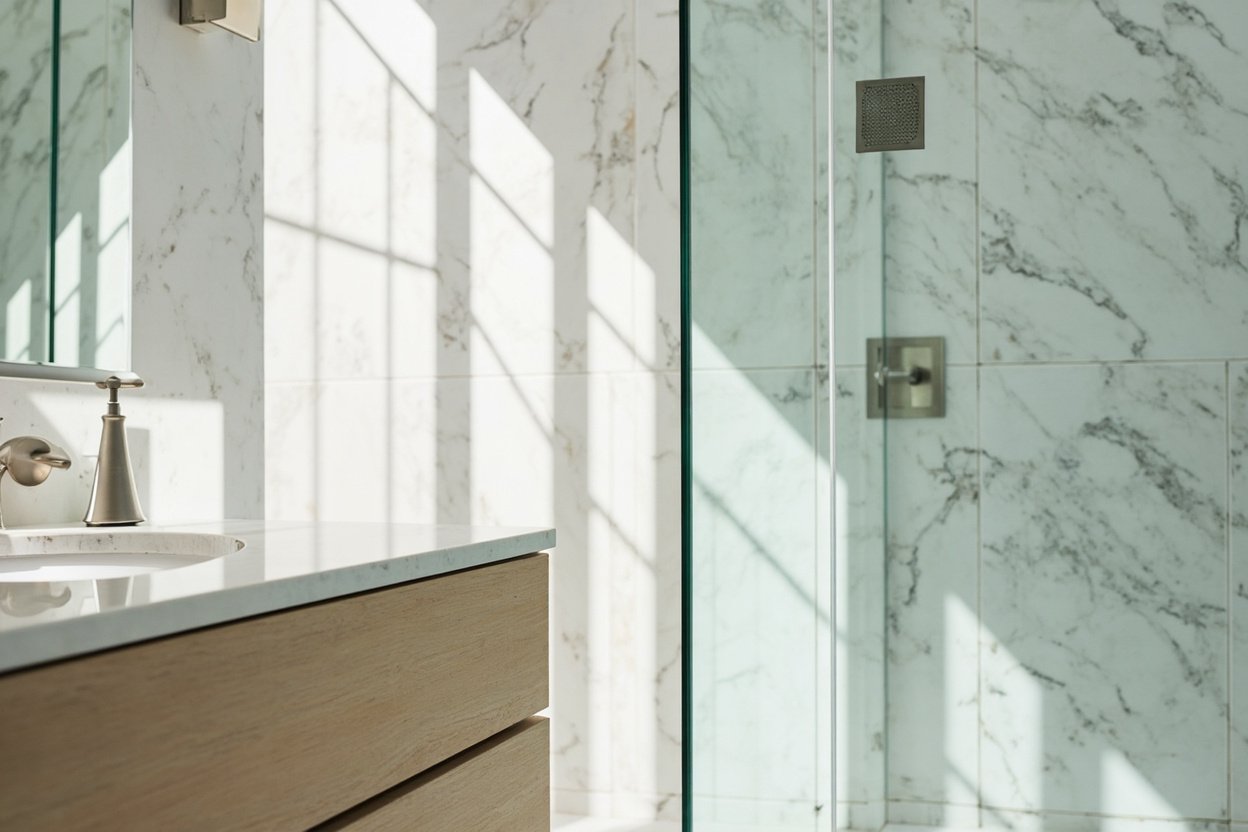
Walk-in showers have become the most requested upgrade in our projects. Homeowners removing aging tubs are looking for curbless or low-threshold designs that improve accessibility while updating the overall look. Tile work in these spaces requires meticulous waterproofing, especially in homes where condensation and temperature swings are common.
Tub-to-shower conversions are particularly popular in two-family and three-family buildings where space is limited. A well-designed conversion can make a small bathroom feel significantly larger without requiring structural changes.
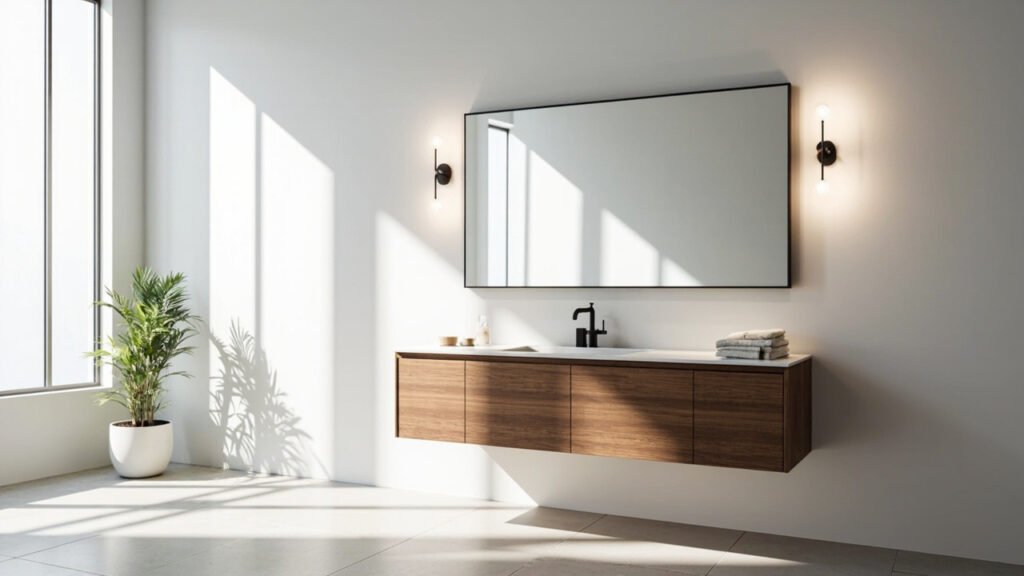
Custom vanities and built-in storage solve layout problems found in many older Boston bathrooms. Standard 36-inch vanities do not always fit older floor plans, so custom millwork becomes necessary when working with unusual dimensions.
Layout Constraints in Boston Bathrooms
Boston homes frequently have bathrooms positioned in awkward locations, often with limited headroom from finished ceilings or sloped floors from settling foundations. Your contractor needs to account for these variables when specifying fixtures and planning drainage lines.
Door swing direction, hallway width, and access for future maintenance all factor into the design. In townhouses and brownstones, bringing materials and equipment through narrow staircases requires planning that does not exist in single-family suburban homes.
Working with a Local Contractor in Boston
Choosing a contractor familiar with Boston building departments, historical commissions in certain municipalities, and the practical realities of renovating older homes makes a measurable difference. Permitting requirements in Boston proper differ from those in surrounding communities like Cambridge, Newton, or Quincy, and an experienced team knows how to navigate those variations without delaying your project.
Look for a contractor who walks through your space before providing any estimate. That site visit reveals information that photographs and floor plans cannot capture, and it demonstrates a commitment to accurate planning rather than guesswork pricing.
Ready to plan? Visit our bathroom remodeling page for Free, no-obligation estimate
“}
When planning your bathroom renovation boston, focus on clear scope, proper waterproofing, and smart layout choices.