
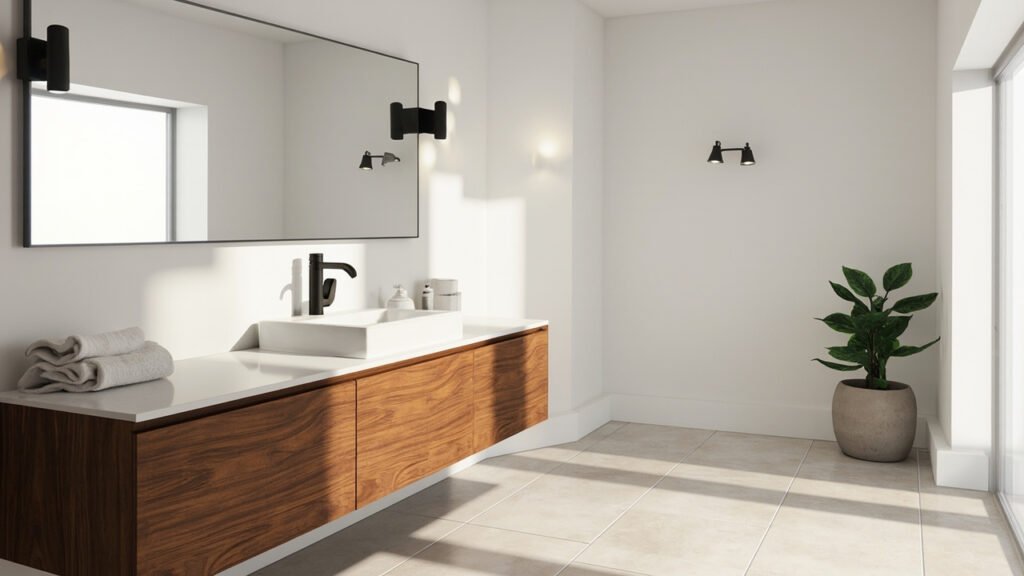
Choosing tile for your Boston bathroom is about more than aesthetics. The climate, age of local housing stock, and specific building codes in Greater Boston, Middlesex County, and Norfolk County all play a role in how your project should be planned. Whether you are updating a single powder room or tackling a full bathroom remodel, understanding the key steps in bathroom tile installation helps you make smarter decisions from the start.
Why Boston-Area Homes Demand Special Tile Planning
Greater Boston is known for its historic housing. Many homes in neighborhoods across Middlesex County and Norfolk County were built decades ago, with original bathrooms that feature non-standard layouts, sloping floors, and aging subfloors. These conditions make proper tile installation more involved than in newer construction.
Before any tile is set, our team assesses the existing substrate. In older homes, the subfloor may need reinforcement or replacement to support tile properly. Skipping this step often leads to cracked grout or loose tiles within a few years. We also account for local humidity patterns, which are especially relevant in coastal areas of Norfolk County where moisture control is critical.
Waterproofing: The Most Important Step You Cannot Skip
Waterproofing is the foundation of any long-lasting bathroom tile installation in Boston. Because Massachusetts experiences cold winters and humid summers, moisture can work its way behind tiles if the system is not properly sealed. A proper waterproofing membrane installed beneath the tile prevents water from reaching the wood subfloor and structural elements of your home.
For walk-in showers and tub-to-shower conversions, waterproofing becomes even more critical. These wet areas require a complete moisture barrier system, not just a single coat of sealant. Our team uses professional-grade waterproofing products designed for long-term performance in New England conditions.
Choosing the Right Tile for Boston Bathrooms
Tile material matters when it comes to durability and maintenance in a Boston home. Porcelain and ceramic are popular choices because they resist moisture and hold up well in variable temperatures. Natural stone can add elegance but requires more maintenance, especially in households with hard water common to parts of Middlesex County.
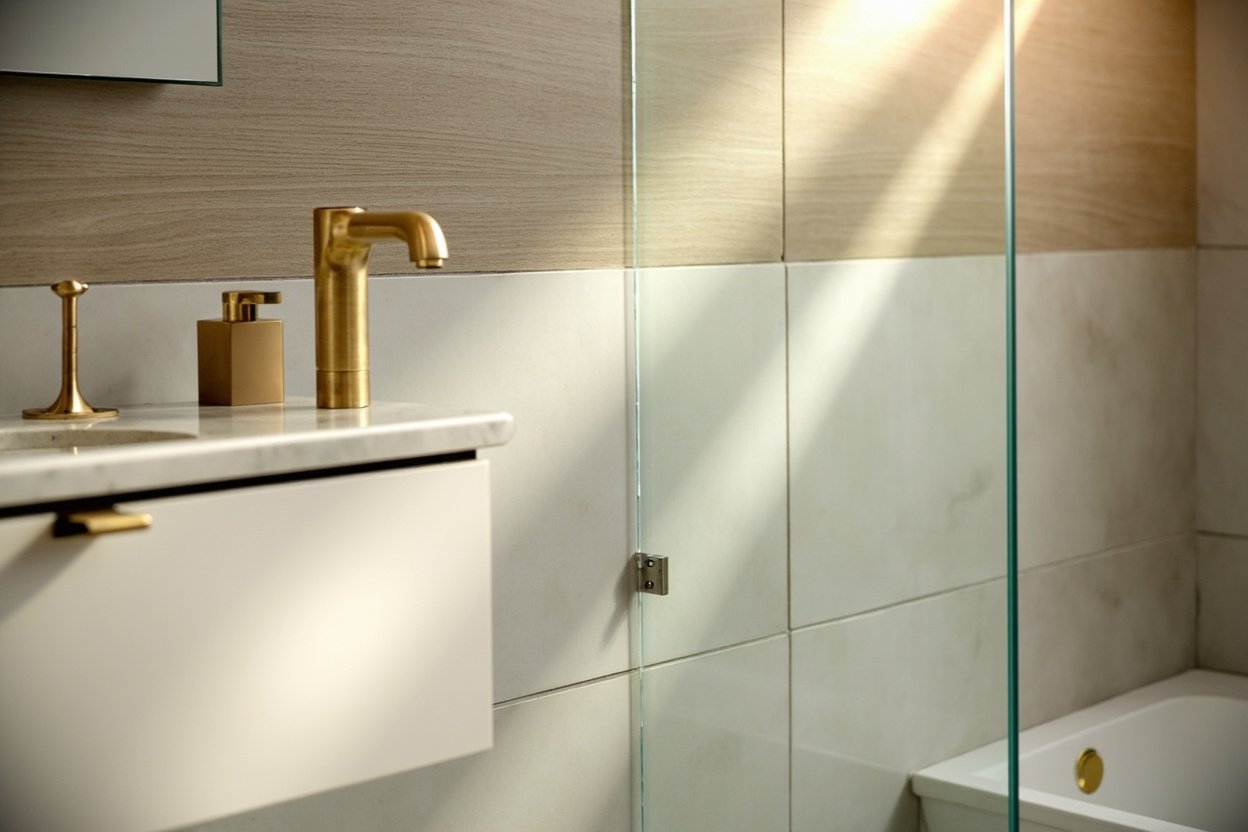
When selecting tile for a bathroom floor, consider slip resistance. Textured porcelain or matte-finish tiles provide better traction, which is especially important in households with young children or older adults. For wall applications in showers or behind vanities, larger-format tiles can make a small Boston bathroom feel more open by reducing the number of grout lines.
Layout Constraints and How We Handle Them
Boston-area bathrooms often have unusual layouts shaped by the architecture of historic homes. Odd angles, limited square footage, and placement of existing plumbing can create challenges when planning tile placement. Our designers work around these constraints to maximize both function and visual appeal.
Some common layout considerations in Greater Boston homes include:
- Non-square walls that require careful measurement and tile cuts
- Low ceilings that limit tile pattern options
- Positioning of existing drain lines and supply valves
- Door swing clearance in narrow bathrooms
- Integration with existing trim and molding profiles
Custom tile work allows us to address these challenges directly, creating a finished look even in challenging spaces.
Ventilation and Its Role in Tile Longevity
Proper ventilation is frequently overlooked in Boston bathroom remodels. Without adequate airflow, moisture from showers and baths becomes trapped, leading to mold growth, damaged grout, and deterioration of the adhesive beneath tiles. Building codes in Massachusetts require exhaust fans in bathrooms without operable windows, but the placement and power of those fans matters for long-term tile health.
We recommend installing high-performance exhaust fans that move enough cubic feet of air per minute for your bathroom’s size. For larger bathrooms or those with steam-producing features, a more powerful unit prevents humidity-related problems down the line. Pairing proper ventilation with grout sealers and quality caulking extends the life of your tile installation significantly.
What to Expect During Your Bathroom Tile Installation
Every bathroom tile installation in Boston follows a systematic process designed to deliver lasting results. After an initial consultation and on-site assessment, we create a detailed plan that addresses your layout, waterproofing needs, and design goals.
The installation phase typically includes preparation of the subfloor, application of the waterproofing membrane, layout planning with precise measurements, setting the tile with professional-grade mortar, grouting and sealing, and final inspection for quality. Throughout the process, we communicate clearly so you always know what is happening in your home.
Ready to plan? Visit our bathroom remodeling page for Free, no-obligation estimate
Work With a Contractor Who Knows Greater Boston
Local knowledge matters in bathroom remodeling. From navigating building permit requirements in Middlesex County to selecting materials that perform well in Norfolk County’s coastal humidity, a contractor with deep roots in Greater Boston understands what makes a tile installation succeed in this region.
Whether you are planning custom tile work for a historic South End brownstone or installing a modern walk-in shower in a newer home in the suburbs, Bath Design Boston brings experience with the specific challenges and opportunities found in Boston-area bathrooms. Contact us today to start planning your project.
When planning your bathroom tile installation boston, focus on clear scope, proper waterproofing, and smart layout choices.