
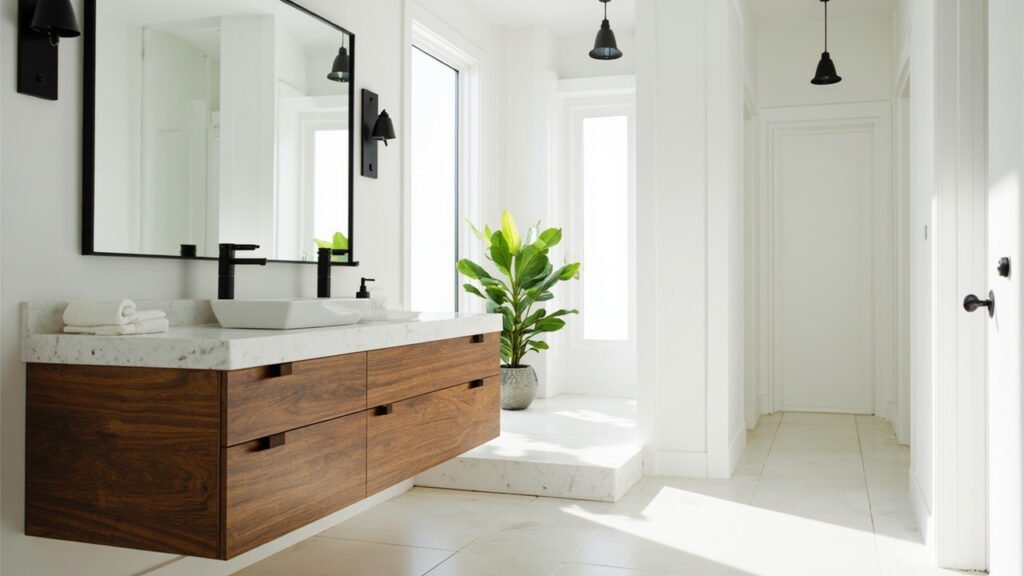
Planning a full bathroom remodel in Boston requires careful consideration of your home’s unique characteristics, local building codes, and the specific challenges that come with renovating properties in Greater Boston, Middlesex County, and Norfolk County. Whether you own a historic Back Bay brownstone or a mid-century ranch in the suburbs, understanding the key factors that influence a successful bathroom renovation will help you make informed decisions and achieve the results you want.

Why Boston Homes Present Unique Bathroom Remodeling Challenges
Boston’s housing stock includes many older properties with distinctive architectural features, and this creates both opportunities and obstacles for bathroom renovations. Homes built before the 1970s often have outdated plumbing systems, non-standard layouts, and construction materials that require special handling during a remodel.
Common issues our team encounters during full bathroom remodels in the Boston area include sloped floors, limited headroom, cast iron plumbing pipes, and knob-and-tube wiring. These elements may need updating to meet current building codes and to support modern fixtures and features. Additionally, many Boston-area homes were built with smaller bathrooms that do not meet today’s expectations for space and functionality.
Working with a contractor experienced in Greater Boston bathroom remodeling means having someone who understands how to work within these constraints while maximizing the potential of your space.
Planning Your Full Bathroom Remodel
Before demolition begins, thorough planning ensures your project stays on track and within budget. A comprehensive bathroom remodel typically involves addressing several key areas:
- Layout and space planning – Optimizing the arrangement of fixtures, storage, and traffic flow
- Plumbing updates – Replacing old pipes and relocating drain lines if necessary
- Electrical work – Adding outlets, updating lighting, and ensuring proper circuit capacity
- Ventilation improvements – Installing adequate exhaust fans to prevent moisture damage
- Waterproofing – Implementing proper moisture barriers and sealants
- Finishes and fixtures – Selecting tiles, countertops, vanities, and hardware
During the planning phase, discuss your priorities with your contractor. Some homeowners want a spa-like retreat with a walk-in shower and heated floors, while others need practical solutions for a small powder room or aging-in-place modifications.
Popular Bathroom Remodeling Options for Boston Homeowners
Several renovation options have become particularly popular among homeowners in the Boston area, and for good reason. Each addresses specific needs common to local properties.
Walk-in showers have become a top choice for homeowners looking to update aging bathrooms or create a more accessible bathing space. Unlike traditional tub-and-shower combinations, walk-in showers offer easy entry, sleek aesthetics, and easier maintenance. Custom tile work can transform these showers into stunning focal points while proper waterproofing ensures long-term durability.
Tub-to-shower conversions are frequently requested in Boston remodels, especially in homes where the original bathtub is rarely used. Converting an unused tub into a spacious shower frees up floor space and modernizes the bathroom’s appearance. This option works well in both compact city apartments and suburban homes.
Custom vanities and storage solutions address the storage challenges common in older Boston homes where bathroom square footage is limited. Custom cabinetry can be designed to fit awkward corners and maximize every inch of available space.
Tile work plays a significant role in bathroom aesthetics and functionality. From classic subway tile to modern large-format porcelain, the right tile choices can elevate your bathroom’s appearance while standing up to the humid conditions common in New England bathrooms.
Addressing Boston-Specific Considerations
Successful bathroom remodels in Greater Boston require attention to factors that may not be concerns in newer construction elsewhere. Proper ventilation ranks among the most critical considerations for Boston homeowners. The New England climate means bathrooms experience significant humidity fluctuations throughout the year. Without adequate exhaust ventilation, moisture can lead to mold growth, peeling paint, and damage to building materials. Your contractor should install properly sized exhaust fans and ensure they vent directly to the exterior.
Waterproofing deserves equal attention. In older homes, bathrooms may not have been originally constructed with modern waterproofing standards. During a full remodel, your contractor should implement comprehensive moisture barriers behind tile, around the shower enclosure, and throughout the floor area. This investment protects your home from water damage and extends the life of your renovation.
Building permits and inspections are required for most full bathroom remodels in Boston, Cambridge, Somerville, Brookline, and surrounding communities. A qualified contractor handles the permit process and schedules required inspections, ensuring your project complies with local building codes in Middlesex County, Norfolk County, and other municipalities.
Choosing Your Boston Bathroom Remodeling Contractor
Selecting the right contractor impacts every aspect of your bathroom renovation, from design through construction and final inspection. Look for a company with proven experience in full bathroom remodels throughout the Greater Boston area, including familiarity with the specific requirements of older homes in your neighborhood.
Review their portfolio of completed projects, ask about their approach to challenges common in Boston homes, and ensure they carry appropriate licensing and insurance. Clear communication from project start through completion helps prevent misunderstandings and keeps your remodel progressing smoothly.
Ready to plan? Visit our bathroom remodeling page for Free, no-obligation estimate
When planning your full bathroom remodel boston, focus on clear scope, proper waterproofing, and smart layout choices.